A while back I described my itinerary as “sprint-stop, sprint-stop.” Some of my destinations have been quick jaunts, where I visit the main attractions and jet on to the next place, while others I’ve settled into for a few weeks, making myself at home and digging deeply into the city’s nooks and crannies.
Japan has been a sprint.
I made a conscious decision before I arrived that I wanted to step on the gas a bit for Japan, and the result has been a whirlwind. In two weeks I’ve visited seven different cities, and until Kyoto I hadn’t spent more than four days in any one place (as of today I’ve spent five days in Kyoto…and I’m leaving tomorrow).
There’s a carrot and there’s a stick driving this pace. The carrot is that there’s so much to see in Japan: every day there’s a new temple, or castle, or public park to visit, and there’s always a chance I’ll stumble across a shrine or shopping street tucked away off a major road. Japan is also a place where even the mundane feels somehow unique, so just walking down the street looking at the stores is an experience by itself.
The stick, though, is the pressure to make the most of the experience. People like to say that Japan is expensive, but the criticism is a little overblown. It’s true when compared to Asia and Southeast Asia, yes, but that’s one of the cheapest parts of the world. Really what I’m doing when dealing with Japanese prices is re-adjusting to things costing about the same as they do in Canada. $10-$15 for a mid-range meal isn’t actually unreasonable – it just stings a bit when you can pay a third as much for a full meal in Malaysia.
That said, though, I am travelling on a budget. My bank account is a ticking clock on my trip, and every dollar I spend is just a little bit less time I’ll be able to spend overseas. So when my money doesn’t go as far, I want to make sure I’m getting the most value for it.
And hey, I’m generally succeeding. Not perfectly – there have been plenty of times where I probably could have spent a little less, or put in an extra few hours to see just one more place. But I am getting the trip of a lifetime, and ticking off a lot of things on Japan’s long list of must-see destinations. So I’m not complaining.
After my last post in Fukuoka I headed down to Nagasaki for a day and a half. I’ve generally been pretty lucky with the weather during my travels, but not so much in Nagasaki – it poured rain for my first day there, soaking my shoes and making it hard to really explore the city. Which is a shame, because Nagasaki is a very cool place. Hiroshima felt like it was defined by the atomic bomb, both in its history and its cityscape, but Nagasaki felt like it just shrugged off the blast and moved on. The city has a rich history as a gateway to the outside world, and its mountainous geography meant that the blast was largely contained to the city’s main valley, leaving the port with all its history largely unscathed.
Nagasaki was also a very practical lesson in how the design of a museum affects the experience. Hiroshima’s museum was incredibly powerful: you moved in near-silence through the darkness, the tattered clothes and tortured photos of the survivors illuminated on black pedestals. The exhibits focused on the human suffering of the people of Hiroshima, and I’ve written before about how unforgettable the stories were.
Nagasaki felt more scientific. The museum was brightly lit and had more audio-visual presentations, meaning that you walked through the exhibits with a voice in the background explaining in Japanese how the shockwave destroyed the city. The focus was on the rubble rather than on the victims and the materials rather than the experiences, which muted the emotional impact.
I don’t want to sound overly critical. The monuments to the bomb outside were very well-done, with many beautiful statues. And Nagasaki is very much worth a visit. But when it comes to visiting the sites of the atomic bombings, Hiroshima was a much more resonant experience for me.
The train ride from Nagasaki to Kyoto, crossing 779.5 kilometres, took about five hours(!) by Shinkansen, and I’ve spent the last week in Kyoto. Many of the travel guides I read recommended spending as much time as possible in Kyoto and Tokyo, and they weren’t wrong – there’s so much to see in this city. Even after five days of extensive sightseeing I’ve barely scratched the surface of the city.
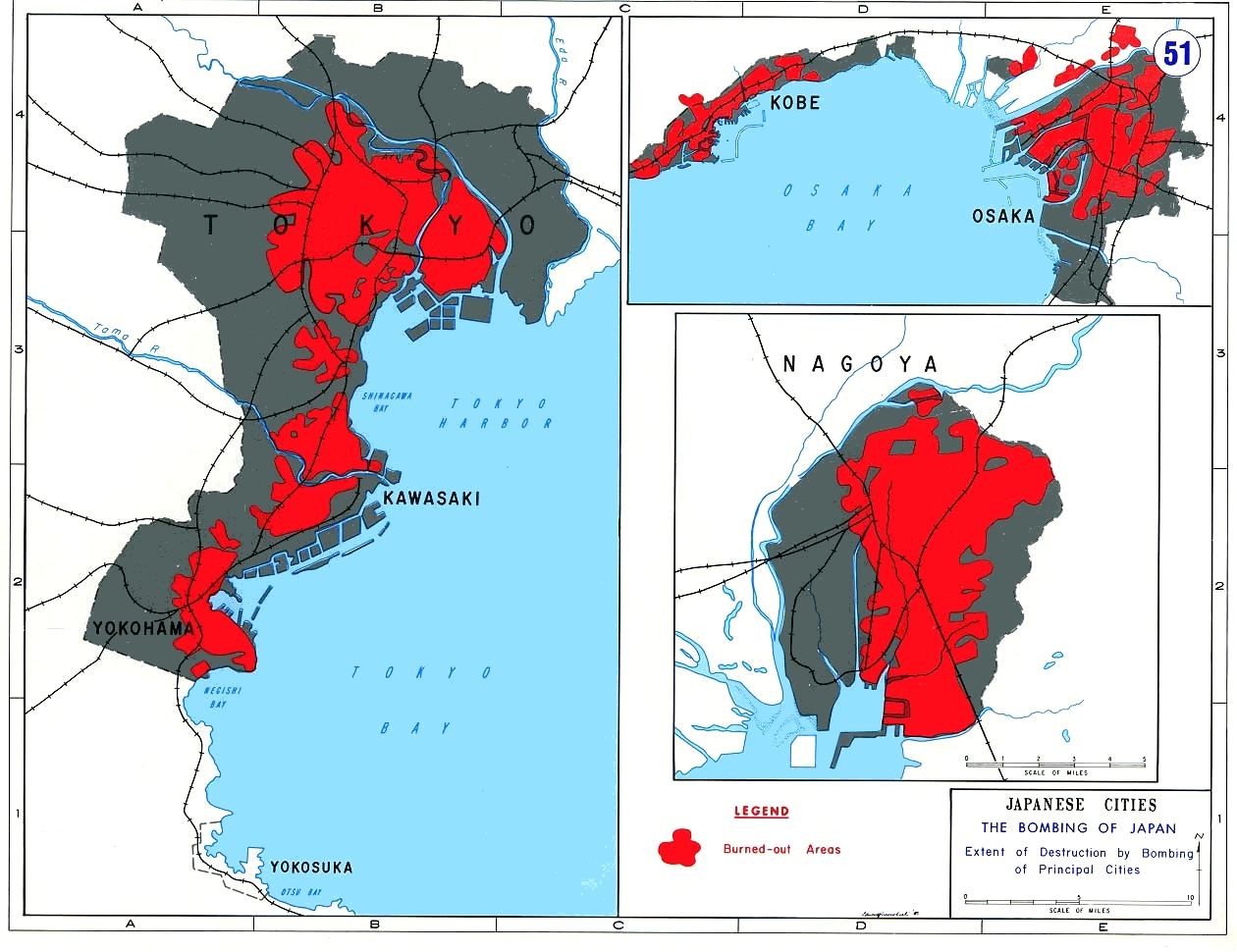
I mentioned in my last post that I was surprised by how big Japan’s historic buildings were. At the time, one of the things that made it so surprising was the contrast between the tightly packed cities and the sweeping, expansive temples and castles. Kyoto has helped bring that into perspective a bit: it was specifically avoided by American bombers in the Second World War, leaving much of its heritage intact, and the result not only shows how cities in Japan used to be arranged, but also how devastating the American bombing campaign was (I mean, look at this). So while it also has the tightly packed stores and shopping streets, it also has enormous temples and palaces smack-dab in the middle of the city.
A side effect of that, though, is that Kyoto is the most touristy place I’ve been to in Japan, which can get a little frustrating. Even during the low season some of the attractions are choked with tourists, and as a result some of the experiences are very tightly controlled. The Kyoto Imperial Palace was a particular disappointment. Most of the grounds were roped off, so visitors were herded down a single, linear path, stopping in the same places to take the same pictures. The palace was still impressive, but hard to appreciate when I went through it like it was an amusement park ride.
On the other hand, though, Kyoto has also been the most social experience I’ve had since I left Malaysia. The backpacker scene in Japan is not as lively as Southeast Asia, where people going the same route travel, socialize, and party together, and the last couple of cities I’ve visited have been a very solitary experience. Kyoto being a major destination for anyone visiting Japan means that I’ve gotten to meet a lot more people, which makes for great company when exploring and fun nights socializing.
It also means that I have a lot of people to meet up with when I get to Tokyo tomorrow. So more busy days ahead!
 Harmon Moon